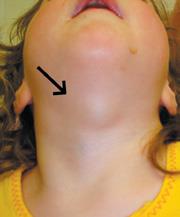
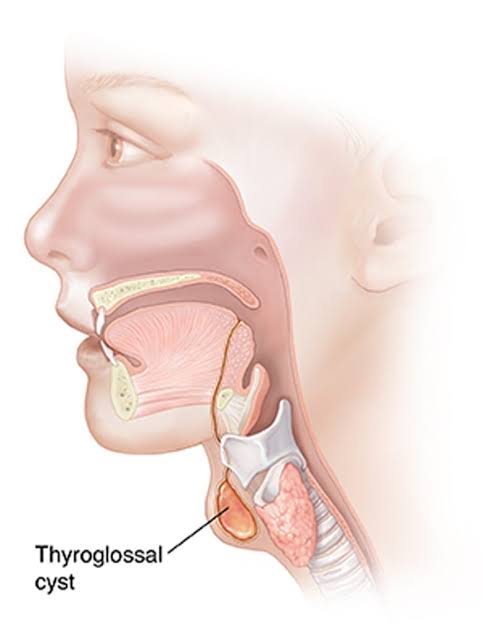
Thyroglossal cyst is a small midline swelling in children, usually situated at or around the level of the hyoid bone near the Adam’s apple. It commonly presents between 2 and 10 years of age, although it can go unnoticed until an infection makes the cyst more apparent.
What is it?
It is a cyst that develops along the tract of thyroid tissue, anywhere from the base of the tongue down to the thyroid cartilage. In many children it is painless and asymptomatic until it becomes enlarged or infected.
Usual location
Suprahyoid or above the hyoid bone
At the level of the hyoid bone
Infrahyoid
Features
Thyroglossal cysts can contain very small amounts of ectopic thyroid tissue, meaning thyroid tissue that is not in its usual place. This may be present in up to 70% of cases. A distinguishing feature is that the swelling can move with swallowing or when the tongue is protruded. This movement can be detected during clinical examination by a surgeon in the clinic.
Thyroglossal duct cysts may be found anywhere along the tract of thyroid tissue from the base of the tongue to the thyroid cartilage.
Investigation
Clinical
A doctor can often detect the condition through clinical examination of the swelling in the clinic.
Radiological
Ultrasound can help distinguish a thyroglossal cyst from other neck swellings such as a branchial cleft cyst. Thyroglossal cyst is 2 to 3 times more common than branchial cleft cyst. In rare cases, ultrasound can also help differentiate it from a thyroid cyst.
Surgical management
Surgery is the definitive treatment. An operation called Sistrunk surgery is performed, in which the cyst is mobilised and dissected along the full tract to reduce the risk of recurrence. A very small risk of cancer has been noted in these cysts.
Risks
Recurrence of a thyroglossal cyst is more likely if the surgery is not performed completely and carefully.
Early assessment by an experienced paediatric surgeon can help confirm the diagnosis and guide the right treatment plan.
Treatment for thyroglossal cyst in Lahore
Paediatric Surgeon Abid Qazi is a senior paediatric surgeon with more than 30 years of experience in paediatric surgery. He is available for physical and virtual consultation, including free online consultation for selected cases.
Circumcision procedure for newborns and older boys
Circumcision is a common surgical procedure in which the foreskin covering the tip of the penis is removed. Our aim is to provide a safe, comfortable and child-friendly experience while making sure parents feel fully informed about the procedure, recovery and follow-up.
Under six months
For young infants under six months of age, circumcision can often be performed safely under local anaesthesia. This means only the area around the penis is numbed, so the procedure can be carried out without a general anaesthetic. Local numbing is usually supported with age-appropriate comfort measures such as sucrose drops for neonates and white noise for older infants.
Why families consider early circumcision
The procedure can usually be performed under local anaesthesia.
Recovery is generally quick.
Babies typically return to normal feeding and sleeping soon afterwards.
There is usually no need for fasting or hospital admission.
How the procedure is done
The procedure is usually performed as a day-case treatment. After examining your baby and confirming he is suitable for circumcision under local anaesthesia, a numbing injection is given around the base of the penis. Once the area is fully numb, the circumcision is performed using a technique appropriate for your child’s age and anatomy.
The procedure itself usually takes around 20 to 30 minutes, although families should expect to spend longer at the clinic for preparation, observation and discharge advice.
Recovery after the procedure
Most babies settle quickly after circumcision and can usually feed shortly afterwards. Mild swelling, redness and a small amount of spotting on the nappy are normal during the first few days. Healing typically occurs over 1 to 2 weeks.
Wound care
Nappy changes
Bathing
Pain relief
Signs of possible complications
How to contact the service for non-emergency advice
Risks and complications
Circumcision is generally very safe when performed by an experienced paediatric surgeon. However, as with any procedure, there are potential risks.
Bleeding
Infection
Swelling
Delayed healing
Scar formation
Cosmetic concerns requiring further treatment, which is rare
Older than one year
For children older than one year of age, circumcision is usually performed under general anaesthesia. This allows your child to sleep comfortably throughout the procedure and helps the operation be carried out safely and without distress.
Why general anaesthesia is recommended
Complete comfort during the procedure
A stress-free experience for the child
Optimal conditions for a safe operation
Excellent pain control when combined with local anaesthetic techniques
The operation
Circumcision is typically performed as a day-case operation, meaning your child can usually return home on the same day. Before surgery, your child will be assessed by both the surgical and anaesthetic teams. Once asleep under general anaesthesia, the foreskin is carefully removed and dissolvable stitches are used where necessary.
The operation itself generally takes around 30 minutes, although the overall hospital stay will be longer because of admission, preparation, recovery and observation.
Recovery after surgery
Most children recover quickly and return home a few hours after the procedure. It is normal to have mild discomfort for several days, swelling around the surgical site, redness during healing and a yellowish healing layer on the wound, which is a normal part of recovery. Complete healing usually occurs within 2 to 4 weeks.
Pain relief
Wound care
Bathing
School or nursery attendance
Follow-up arrangements if required
Most children can return to normal activities within a couple of days, although vigorous physical activity should be avoided until healing is complete.
Risks and complications
Bleeding
Infection
Swelling
Wound healing problems
Excessive or insufficient skin removal
Cosmetic concerns
Risks associated with general anaesthesia, which are uncommon in healthy children
Our surgical and anaesthetic teams take every precaution to minimise these risks and ensure the safest possible care for your child.
When to seek medical advice
Please contact your healthcare team if your child develops any of the following:
Significant bleeding
Increasing redness or swelling
Fever
Difficulty passing urine
Severe pain not controlled by prescribed medication
Any concerns about the appearance of the wound
Early assessment can help ensure that any problems are identified and treated promptly.
Questions from parents
We understand that choosing circumcision for your child is an important decision. We are happy to discuss the procedure, expected recovery, potential risks and any questions you may have so you can make an informed choice with confidence.
Appointments in Lahore
Paediatric Surgeon Abid Qazi is a senior paediatric surgeon with more than 30 years of experience in children’s surgery and over 20 years of experience in laparoscopic surgery. He has a special interest in circumcision. He set up two community circumcision clinics in the United Kingdom in 2008, where he performed more than 8,000 circumcisions in boys of all ages up to 18 years with 99% positive feedback from parents and families.
Appointments in Lahore by arrangement
Virtual second opinions available for families across Pakistan
Groin and scrotal swellings are common reasons for children to be seen by a paediatric surgeon. Some are harmless and may settle with time, while others need planned treatment or urgent surgery. Common groin conditions in children include cryptorchidism (undescended testis), hydrocele, and inguinal hernia.
Cryptorchidism / Undescended Testis
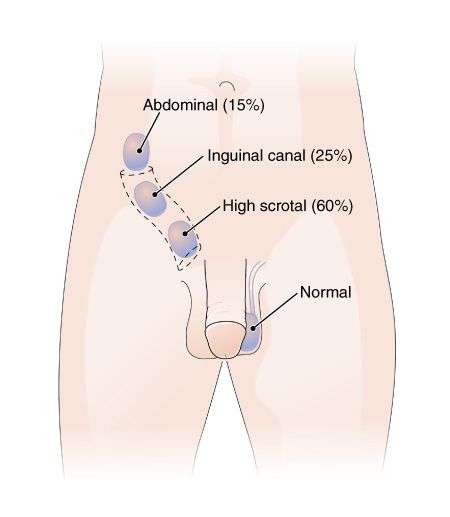
Illustration guide: In an undescended testis, one testis remains higher in the groin or abdomen instead of sitting in the scrotum.
Image credit: Undescended testis illustration courtesy of urologists.org.
Cryptorchidism, also called an undescended testis, means that one or both testicles have not moved down into the scrotum. This is common in newborn boys, especially if they are born early. In some babies, the testis comes down on its own during the first few months of life. If it does not, treatment may be advised to help protect fertility and reduce later risks.
If the testis remains undescended, a paediatric surgeon may recommend an operation called orchidopexy to bring it into the scrotum and fix it in place. This is usually planned after infancy, depending on the child’s age and examination findings.
Hydrocele
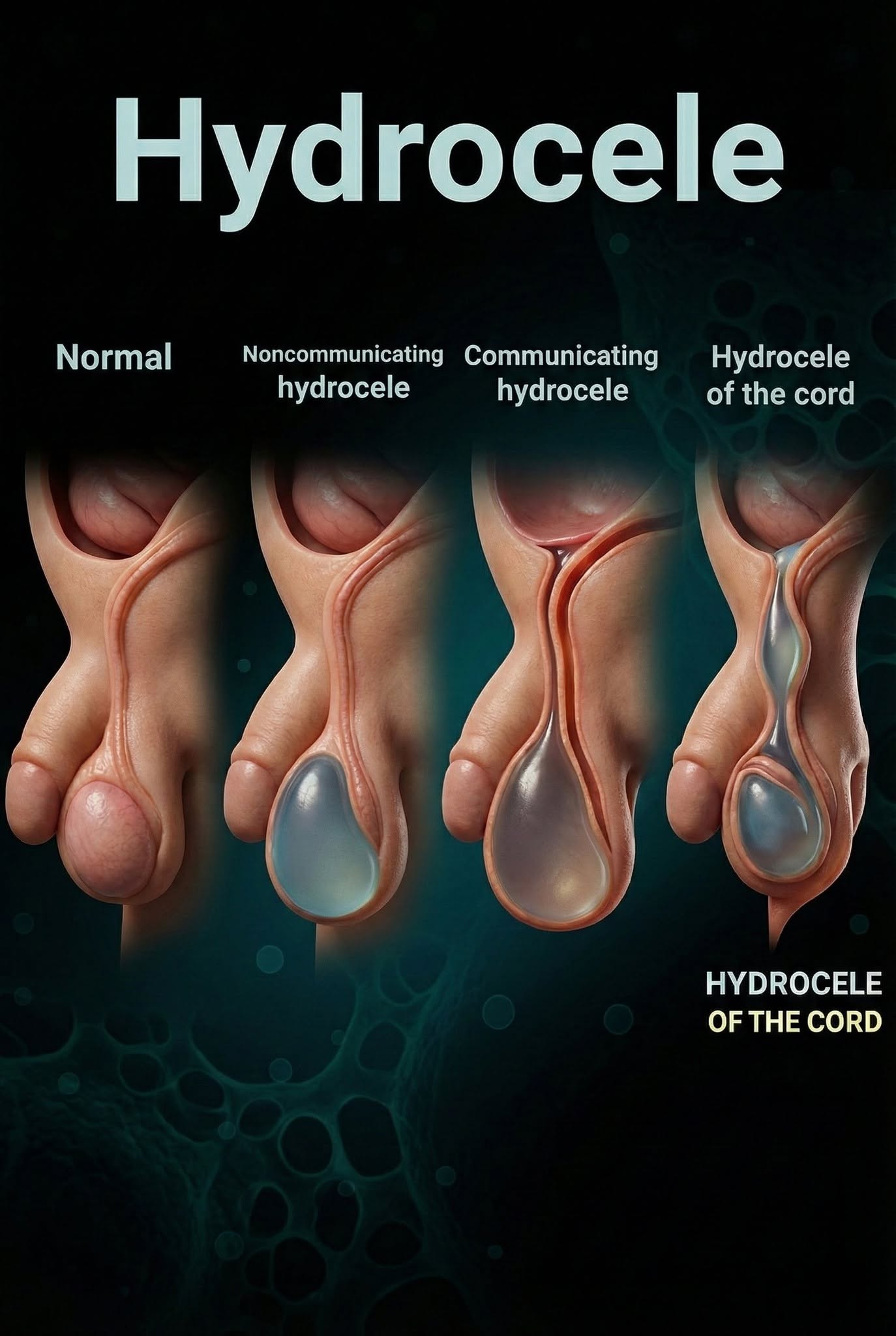
Illustration guide: A hydrocele is a fluid-filled swelling around the testis. It usually causes a smooth, painless swelling in the scrotum.
Image credit: Hydrocele picture courtesy of Crazy Factor, Health and wellness on Facebook.com.
A hydrocele is a collection of fluid around the testis, causing swelling in the scrotum. It is often soft, painless, and may change in size during the day. Many hydroceles in babies improve on their own over time and can be observed in the first year or two of life.
However, if the swelling persists up to 2 to 3 years or becomes larger, your child may need a small operation to repair it. A hydrocele can sometimes be linked to an inguinal hernia, so an expert examination is important.
Inguinal Hernia in Children
Illustration guide: In an inguinal hernia, tissue such as bowel passes through an opening in the groin, creating a bulge that may come and go.
Like a hydrocele, an inguinal hernia is also a groin swelling and may look similar at first. However, unlike a hydrocele, an inguinal hernia contains tissue such as bowel or fat that passes through a small opening in the groin. This may cause a visible or felt bulge.
This may appear as a lump in the groin or scrotum. In girls, a hernia may appear as a swelling in the groin or labial area. The swelling may come and go, often becoming more noticeable when a child cries, coughs, strains, or is active, and may disappear at other times. Unlike many hydroceles or an umbilical hernia, an inguinal hernia does not usually go away by itself and requires surgery to close the opening and prevent complications.
Emergency note: An obstructed inguinal hernia is an emergency and can be life threatening if treatment is delayed. Seek urgent medical care if the swelling becomes painful, firm, red, cannot be pushed back in, or if your child has vomiting, abdominal swelling, distress, or seems unwell.
Parents should seek urgent medical help if the lump becomes painful, firm, red, cannot be pushed back in, or if the child has vomiting, abdominal swelling, distress, or appears unwell, as this may suggest that the hernia is trapped. Usually an inguinal hernia is treated with surgery within a few weeks of diagnosis because trapped bowel or compromised blood flow can cause damage in an infant.
Laparoscopic Hernia and Hydrocele Repair
Both inguinal hernia and hydrocele can be repaired using minimal access technique which leaves no scar after surgery. Recovery is fast and children to return home the same day. I have been performing laparoscopic surgery for the last twenty years with excellent results.
When to Seek Medical Advice
Please arrange a medical review if you notice a persistent groin or scrotal swelling, if one testis seems absent from the scrotum, or if a swelling becomes painful, red, or hard. Early assessment helps clarify whether observation, planned surgery, or urgent treatment is needed.
Treatment for Groin Conditions in Lahore
Paediatric Surgeon Abid Qazi is a senior paediatric surgeon with more than 30 years of experience in children’s surgery and over 20 years of experience in laparoscopic surgery. He assesses groin conditions in children, including hydrocele, inguinal hernia, and undescended testis, and advises parents on the safest timing and type of treatment.
Appointments in Lahore by arrangement
Virtual second opinions available for families across Pakistan
WhatsApp: +923174002444
Email: info@abidqazi.com
If you are concerned about a groin swelling, hydrocele, hernia, or undescended testis in your child, please seek specialist advice early.
Acute appendicitis is a sudden inflammation of the appendix and is considered a surgical emergency. The appendix is a small blind pouch attached to the large intestine on the lower right side of the abdomen. Its exact purpose is not fully understood, so it can be safely removed when appendicitis occurs.
What is appendicitis?
Acute appendicitis can develop in stages:
Obstruction
Inflammation
Ulceration and gangrene
Perforation
It most commonly affects children between 8 and 11 years of age, although it can occur at any age. Symptoms may vary from child to child.
Common symptoms
Pain that starts around the belly button and then moves to the lower right side of the abdomen within a few hours
Loss of appetite
Nausea
Vomiting
Fever, which is often a later sign
Clinical diagnosis can sometimes be challenging because the appendix can lie in different positions in the abdomen. During assessment, the doctor may perform specific clinical tests to support the diagnosis.
Pressing on the tummy in specific areas
Moving the leg in certain ways
Hop sign, where the child is asked to jump or the area under the right heel is gently tapped with the leg extended
Imaging tests
Imaging is not necessary in every case, but an ultrasound scan or CT scan may be used to support the clinical diagnosis when needed.
Management
Treatment depends on whether the appendicitis is simple or complicated, and also on how long the symptoms have been present.
Simple appendicitis
Initial treatment includes pain relief and antibiotics
Appendicectomy is the definitive treatment
When there is a short history and no perforation, surgery can often be done promptly
Complicated appendicitis
With perforation and a short history, IV fluids and antibiotics are usually started first
Appendicectomy may be performed after clinical improvement
With a longer history and an appendix mass, conservative treatment may be advised first, followed by interval appendicectomy after around 3 months
If there is no clinical improvement, surgery becomes necessary
Surgical options
Open surgery is now almost obsolete in many cases. Laparoscopic surgery is commonly used and usually involves three small incisions for the camera and instruments.
SILS, or single-incision laparoscopic surgery, is a further advancement. It uses one incision through the belly button, which can offer better cosmetic results.
There are two main SILS techniques:
Intracorporeal SILS appendectomy, where the procedure is completed inside the abdomen using laparoscopic instruments
Exteriorisation technique, where the appendix is delivered through an umbilical incision and removed outside the abdomen, similar to a mini open operation
Advantages of SILS
Faster recovery after surgery
A single small incision hidden under the belly button for a better cosmetic outcome
Possible challenges of SILS
A learning curve because the technique is newer and more specialised
Instrument crowding through a smaller incision, which can make the operation technically more demanding
SILS in Lahore
Dr. Abid Qazi is a senior paediatric surgeon with more than 30 years of experience in paediatric surgery. He has used SILS as a standard technique for many paediatric procedures, including appendicectomy, and has helped many children recover successfully.
He is available for in-person consultations in Lahore as well as virtual consultations and second opinions. To request an appointment, please email info@abidqazi.com, send a WhatsApp message to +92 317 4002444, or visit the Contact page.
Early assessment can make a real difference in children with suspected appendicitis.