
Groin Conditions in Children
Groin and scrotal swellings are common reasons for children to be seen by a paediatric surgeon. Some are harmless and may settle with time, while others need planned treatment or urgent surgery. Common groin conditions in children include cryptorchidism (undescended testis), hydrocele, and inguinal hernia.
Cryptorchidism / Undescended Testis
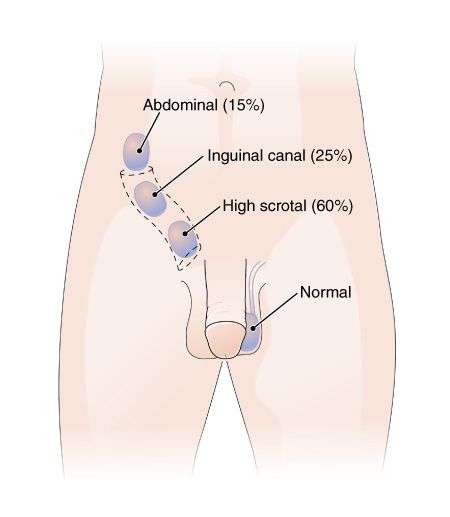
Illustration guide: In an undescended testis, one testis remains higher in the groin or abdomen instead of sitting in the scrotum.
Image credit: Undescended testis illustration courtesy of urologists.org.
Cryptorchidism, also called an undescended testis, means that one or both testicles have not moved down into the scrotum. This is common in newborn boys, especially if they are born early. In some babies, the testis comes down on its own during the first few months of life. If it does not, treatment may be advised to help protect fertility and reduce later risks.
If the testis remains undescended, a paediatric surgeon may recommend an operation called orchidopexy to bring it into the scrotum and fix it in place. This is usually planned after infancy, depending on the child’s age and examination findings.
Hydrocele
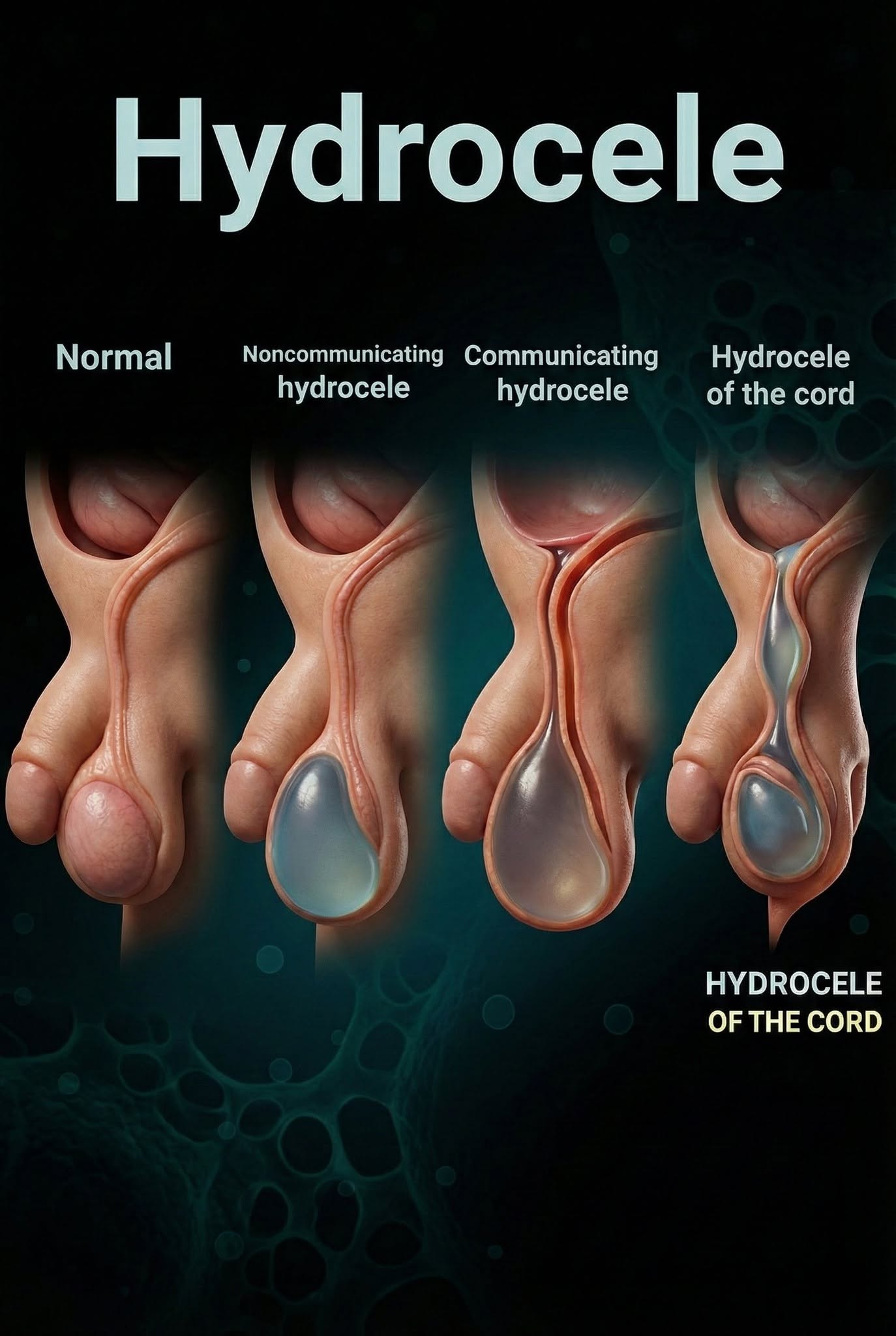
Illustration guide: A hydrocele is a fluid-filled swelling around the testis. It usually causes a smooth, painless swelling in the scrotum.
Image credit: Hydrocele picture courtesy of Crazy Factor, Health and wellness on Facebook.com.
A hydrocele is a collection of fluid around the testis, causing swelling in the scrotum. It is often soft, painless, and may change in size during the day. Many hydroceles in babies improve on their own over time and can be observed in the first year or two of life.
However, if the swelling persists up to 2 to 3 years or becomes larger, your child may need a small operation to repair it. A hydrocele can sometimes be linked to an inguinal hernia, so an expert examination is important.
Inguinal Hernia in Children

Illustration guide: In an inguinal hernia, tissue such as bowel passes through an opening in the groin, creating a bulge that may come and go.
Like a hydrocele, an inguinal hernia is also a groin swelling and may look similar at first. However, unlike a hydrocele, an inguinal hernia contains tissue such as bowel or fat that passes through a small opening in the groin. This may cause a visible or felt bulge.
This may appear as a lump in the groin or scrotum. In girls, a hernia may appear as a swelling in the groin or labial area. The swelling may come and go, often becoming more noticeable when a child cries, coughs, strains, or is active, and may disappear at other times. Unlike many hydroceles or an umbilical hernia, an inguinal hernia does not usually go away by itself and requires surgery to close the opening and prevent complications.


Emergency note: An obstructed inguinal hernia is an emergency and can be life threatening if treatment is delayed. Seek urgent medical care if the swelling becomes painful, firm, red, cannot be pushed back in, or if your child has vomiting, abdominal swelling, distress, or seems unwell.
Parents should seek urgent medical help if the lump becomes painful, firm, red, cannot be pushed back in, or if the child has vomiting, abdominal swelling, distress, or appears unwell, as this may suggest that the hernia is trapped. Usually an inguinal hernia is treated with surgery within a few weeks of diagnosis because trapped bowel or compromised blood flow can cause damage in an infant.
Laparoscopic Hernia and Hydrocele Repair
Both inguinal hernia and hydrocele can be repaired using minimal access technique which leaves no scar after surgery. Recovery is fast and children to return home the same day. I have been performing laparoscopic surgery for the last twenty years with excellent results.
When to Seek Medical Advice
Please arrange a medical review if you notice a persistent groin or scrotal swelling, if one testis seems absent from the scrotum, or if a swelling becomes painful, red, or hard. Early assessment helps clarify whether observation, planned surgery, or urgent treatment is needed.
Treatment for Groin Conditions in Lahore
Paediatric Surgeon Abid Qazi is a senior paediatric surgeon with more than 30 years of experience in children’s surgery and over 20 years of experience in laparoscopic surgery. He assesses groin conditions in children, including hydrocele, inguinal hernia, and undescended testis, and advises parents on the safest timing and type of treatment.
- Appointments in Lahore by arrangement
- Virtual second opinions available for families across Pakistan
- WhatsApp: +923174002444
- Email: info@abidqazi.com
If you are concerned about a groin swelling, hydrocele, hernia, or undescended testis in your child, please seek specialist advice early.
Leave a Reply